Saddleback College, located in South Orange County, California, is home to approximately 27,000 students with about 17% first-generation college students. Despite beign in a relatively affluent city within Southern California, our students report making too much for Pell grant support and not enough for books or, in many cases, basic needs.
It is against this backdrop that the college has turned its focus towards identifying our most chronic equity gaps and taking steps to address them. We started with building disaggregated equity dashboards for programs, processes, and even for faculty members. Our first-generation students were being left behind due to our practices and like any good higher education institution, we formed a workgroup to investigate (stop me if you’ve heard this before).
Except, we realized: Our students don't have time to wait.
The good news—in our first year as a FirstGen Network member institution, our cross-functional workgroup supported the creation of the First-Gen Empowerment Club (FGEC), a student-led club that ensures the strengths, voices and cultural wealth of our students is front and center when creating their content.
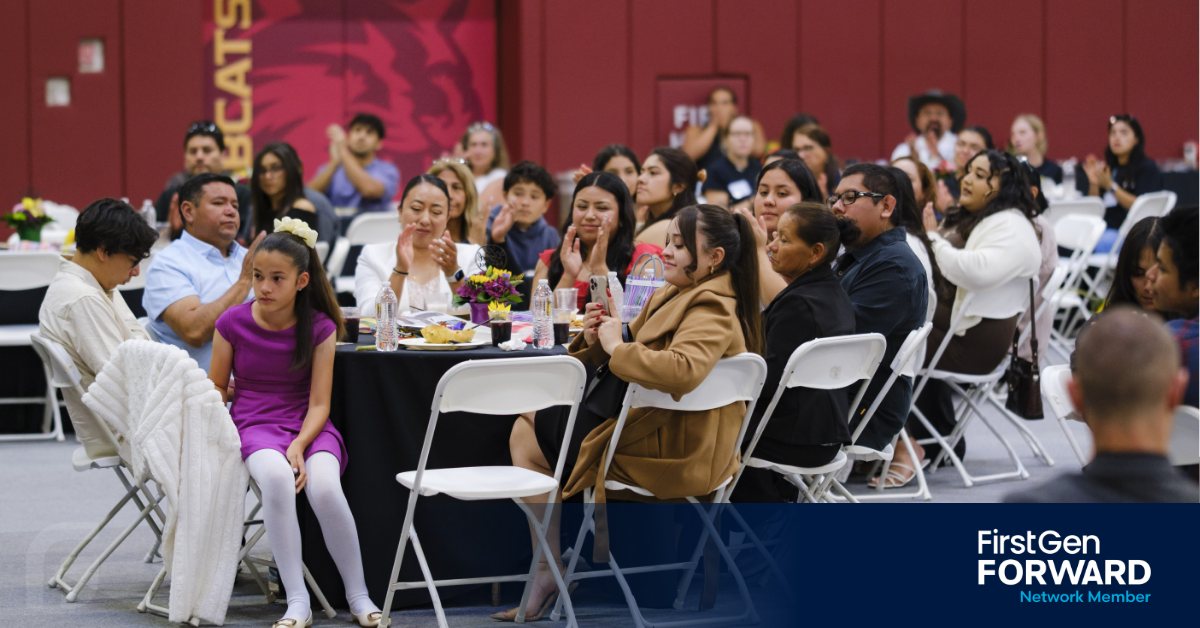
The First-Gen Empowerment Club meets monthly and has 21 student members. This year Saddleback’s EOPS department collaborated with FGCE to host the first End-of-Year Celebration in almost a decade. Together they celebrated 31 First-Gen students and made sure they had First-Gen stoles to wear at the upcoming college commencement.
The FGEC is holding a summer planning retreat, where they plan to map out their outreach calendar and develop peer support resources in preparation for welcoming and supporting next year’s students. And the student club, in partnership with the EOPS department, just held a priority registration event that explained what priority registration is and why it’s important.
But the bad news—our workgroup identified more silos that continue to thwart the good work our students are trying to accomplish. Examples include a separate FirstGen celebration that was meant to be held in collaboration with the transfer celebration. This portion fell through the cracks, and as a result, a last-minute pivot to include a First-Gen component in the EOPS Department celebration excluded students who were not program participants, leaving non-participants left to pick up stoles from their club advisor. As for the priority registration event, no one outside the club or special population programs knew about it. So, 17% of 27,000 students missed out because of silos.
I’ve heard silos referred to as “Cylinders of Excellence.” The more our workgroup explored what was happening on campus to support our first-generation students, the more silos we discovered.
We are not dismayed, in fact, quite the opposite. Knowing we could do two things simultaneously: support our students immediately because they couldn’t afford to wait, while also creating an inventory of existing work, disaggregated dashboards and a cross-functional team ready to dive in, reinforced our effort.
Upon reflection, each of us on the workgroup was a first-generation college student. Many of us are first-generation higher education student affairs professionals. We remember asking, “Why?”, and now find ourselves asking the same thing when we encounter these silos. “Why?”
There is a sea change happening across the community college landscape, a natural transition as first-generation students are now the practitioners and approach dismantling silos with increased urgency.
Our students don't have time to wait.
/FGCC%20Blogs/2026%20State%20Proclamation.png)